For financial services organizations, a meeting isn’t just a meeting. It’s a signal — about leadership, about culture, and about how seriously the organization takes the people in the room.
There’s a particular kind of pressure that comes with producing events for financial services organizations. It’s not just about logistics. It’s about what the room communicates before a single word is spoken.
When the audience is a board of shareholders, a firm’s senior leadership, or a room of high-net-worth clients, the production environment carries weight. A polished, well-executed experience signals competence, credibility, and care. A rough one, bad audio, an ill-prepared speaker, a scenic environment that doesn’t match the occasion, sends a different message entirely. And in financial services, that message outlasts the meeting.
Annual meetings, town halls, and client-facing conferences are among the highest-stakes events any organization produces. Here’s how financial services firms can approach them differently, and better.
1. Treat the Room as Part of the Message
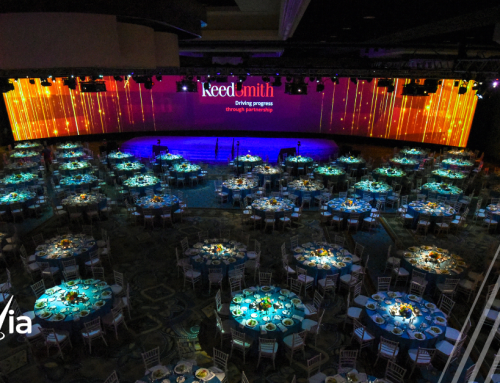
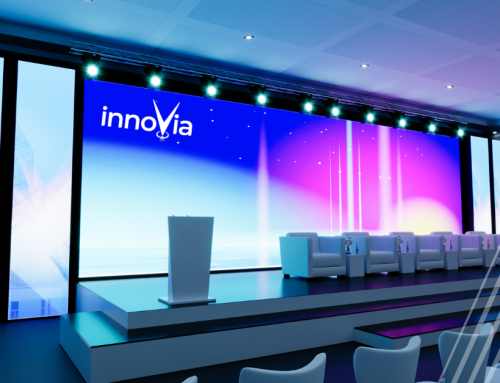
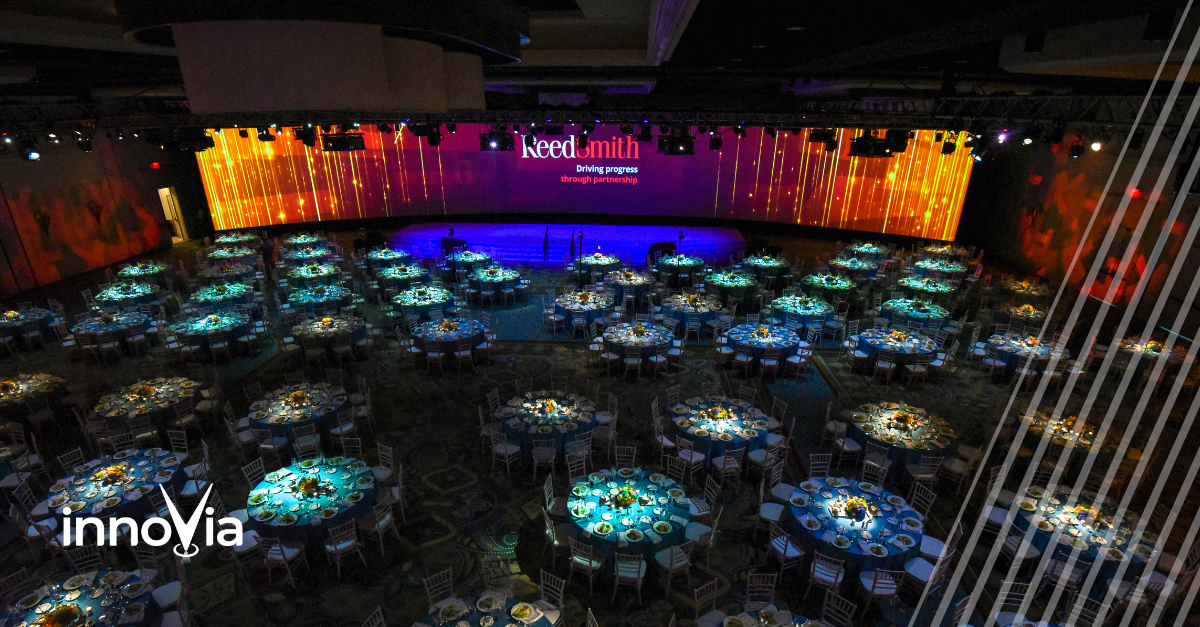
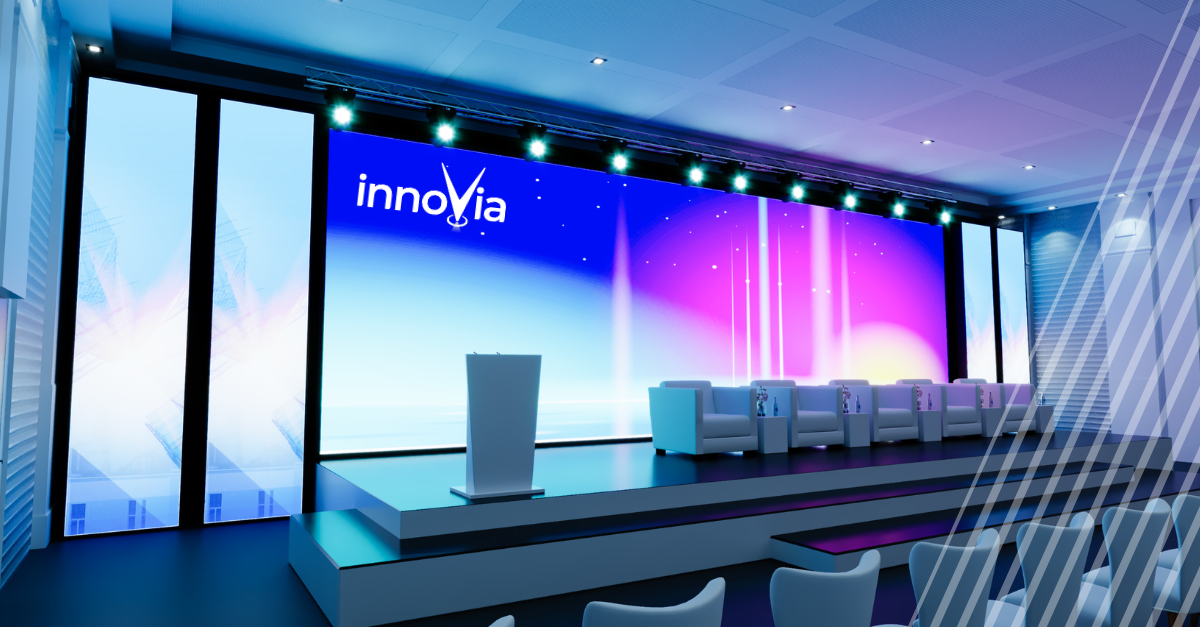
In financial services, perception is currency. The physical environment of your event, the stage, the lighting, the screen quality, the seating configuration, communicates something about your organization before your CEO says a word.
A well-designed event environment signals that leadership is serious, that the occasion deserves investment, and that the people in the room are valued. A generic setup signals the opposite, even when the content is strong.
This doesn’t mean extravagant. It means intentional. Clean staging, sharp audio, a visual environment that reinforces your brand and the gravity of the moment, these aren’t luxuries. They’re the baseline for an event that lands the way you intend it to.
2. Build Precision Into Every Technical Element
Financial services events run on fixed timelines with real consequences for deviation. Annual shareholder meetings have legal and regulatory implications. Town halls with thousands of employees — in-room and remote, have no tolerance for technical failures that undermine confidence in leadership.
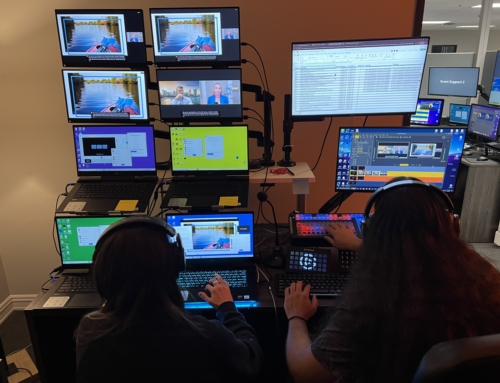
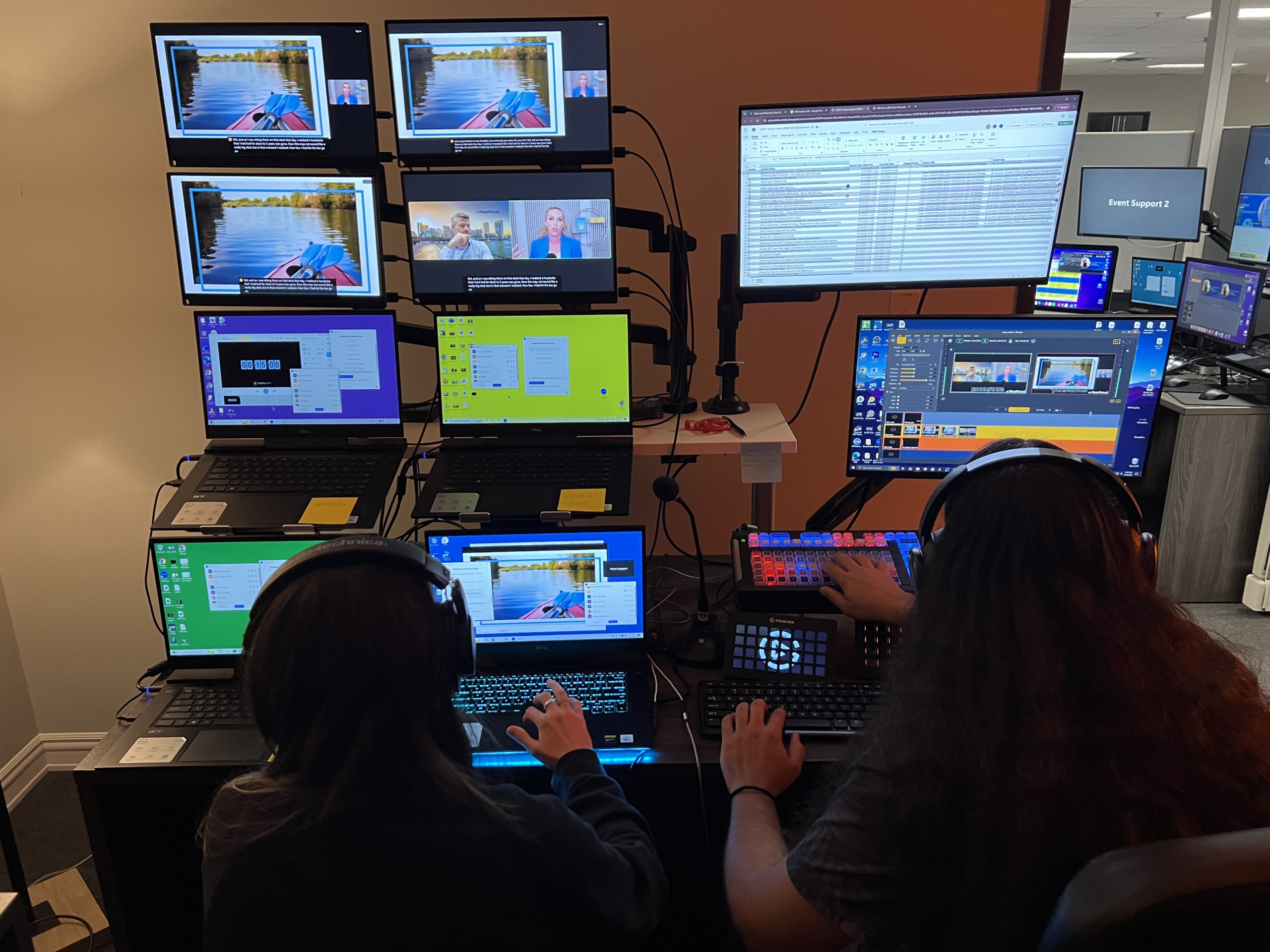
That level of precision requires more than competent AV. It requires a Technical Director who owns the full production environment, not just the equipment. Someone who has walked the room, tested every element, confirmed every transition, and thought through every contingency before the first attendee arrives.
The difference between an event that runs flawlessly and one that stumbles is almost always the depth of preparation behind it, not what happens in the moment.
3. Prioritize Speaker Preparation as a Production Responsibility
The speaker is the centerpiece of every town hall and annual meeting. And yet speaker preparation is one of the most commonly under-resourced elements of financial services event production.
A CFO presenting to shareholders, a CEO addressing firm-wide leadership, a relationship manager presenting to a room of clients, each needs to walk in confident, technically prepared, and focused entirely on their message. Not troubleshooting a clicker, not squinting at a confidence monitor they’ve never seen before, not navigating a run-of-show they received the morning of.
Great event production treats speaker prep as part of the job, not an afterthought. Structured rehearsals, confirmed technical setups, a Technical Director who has worked through every cue with every presenter before the room fills.
4. Design for the Hybrid Reality
Most financial services organizations today run events with both in-room and remote participants. Shareholders joining a virtual feed. Regional offices dialing into a town hall. International teams participating across time zones.
The challenge is that hybrid events are easy to do poorly and genuinely difficult to do well. The most common failure mode: optimizing entirely for the in-room experience and treating the remote audience as an afterthought. The result is a disjointed experience that leaves remote participants feeling exactly that, remote.
A strong hybrid production treats both audiences as primary. That means audio mixed for both environments, camera coverage that gives remote participants the context of the room, and a production team that is actively managing the digital experience in parallel with the physical one.
5. Discretion Is a Requirement, Not a Feature
Financial services events routinely involve sensitive information, earnings data, strategic plans, personnel announcements, regulatory matters. The production team in that room is privy to all of it.
This is rarely discussed openly in vendor conversations, but it should be. Your event production partner needs to understand the culture of discretion that financial services organizations operate in, and demonstrate it, in how they brief their crew, how they handle materials, and how they conduct themselves on-site.
A production partner who has never worked in this environment may not know what they don’t know. Ask the question directly: how do you handle confidential content in high-stakes environments?
6. Don’t Let Logistics Drive Strategic Decisions
One of the most common mistakes financial services teams make is letting logistical convenience drive production decisions. The hotel has an in-house AV team, so they use it. The venue has a preferred vendor, so they don’t look further.
Those decisions often look efficient in planning and feel costly on show day, in quality, in accountability, and in the experience the audience actually has.
The question isn’t “what’s the easiest path to a functional event?” It’s “what does this moment deserve, and who is the right partner to deliver it?”
For a shareholder meeting, a leadership town hall, or a client conference, the answer to that question matters more than the convenience of the default.
The Standard Matches the Stakes
Financial services organizations hold themselves to a high standard in every client interaction, every report, every communication. The events they produce should be no different.
The room is the message. The production is the proof. And the partner you choose is the team that stands between your vision and what your audience actually experiences.
innoVia produces corporate events, leadership conferences, and annual meetings for organizations where execution quality is non-negotiable. One partner, from concept to curtain call.